


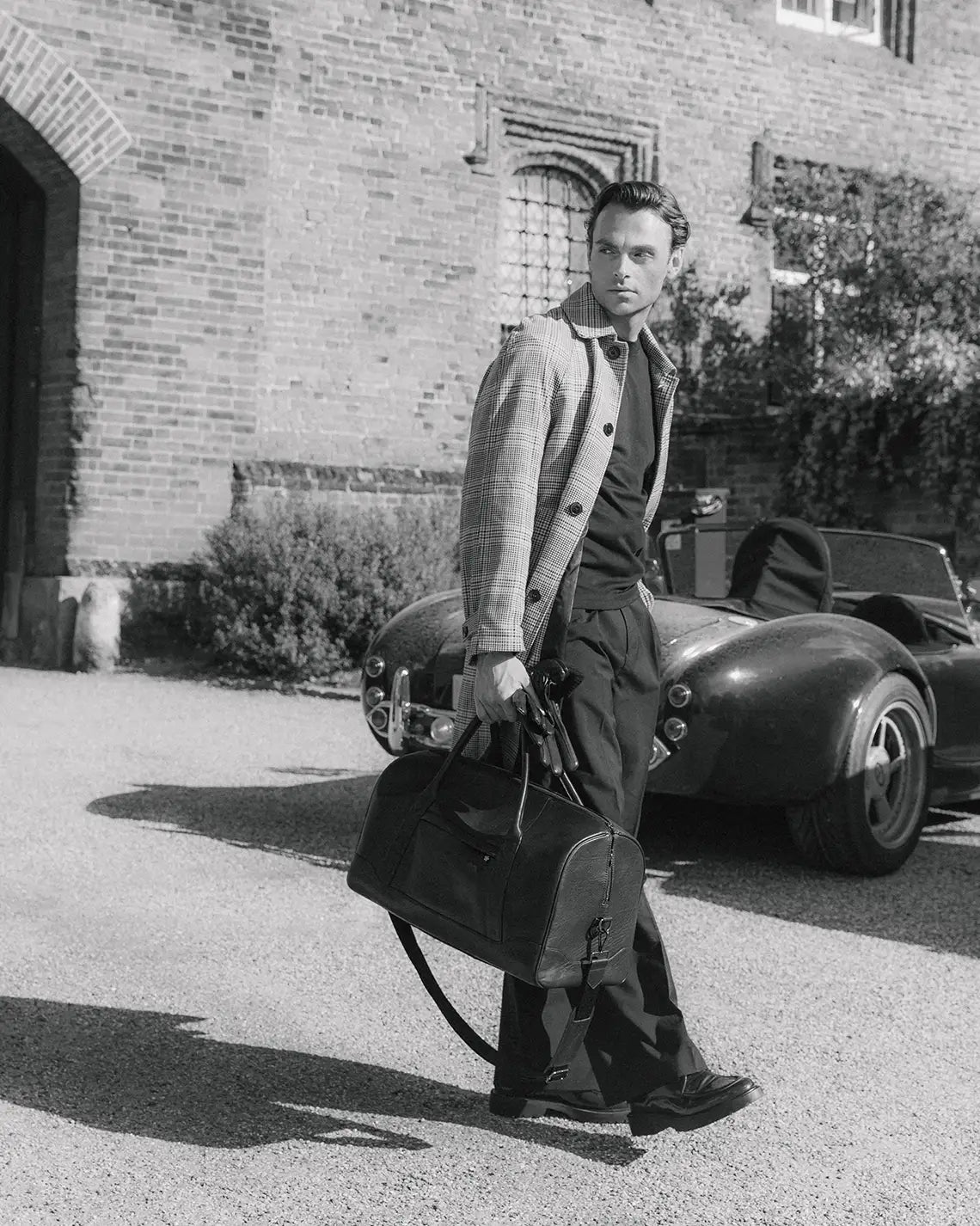


As the great-grandson of founder Alfred Dunhill, Mark Dunhill grew up with heritage – not simply as history, but as something to be carried forward. He later became President of Alfred Dunhill, a position he held for many years, before continuing his career as CEO of Fabergé. He therefore brings a rare perspective, both as a fourth-generation member of a historic luxury house and as a leader of some of the world’s most iconic luxury brands. In his introduction to The Art of Glovemaking since 1684, he reflects on what defines genuine heritage – and why preserving the past is ultimately about keeping it alive.

INTRODUCTION TO The Art of Glovemaking since 1684
Few luxury houses can trace their origins back more than three centuries. Fewer still can claim an unbroken connection to the craft on which their reputation was originally built. RHANDERS can. Its story reaches back to 1684 and the glove-makers of Randers, whose exceptional skill with leather created products that would become known far beyond Denmark. Across the centuries that followed, the business has survived wars, economic crises, profound social change and the transformation of both fashion and commerce. At several points in this remarkable history its future has hung by a thread. Yet it has endured. That longevity alone makes RHANDERS extraordinary; the story of how it has endured makes it captivating.
The pages that follow tell that story wonderfully. It is populated by craftsmen and entrepreneurs, kings and queens, artists and adventurers; by periods of great prosperity and moments when everything appeared to have been lost. However, running through it all is something more important than any individual episode: a remarkable continuity of craftsmanship, quality and belief. This is the essence of genuine heritage. In the luxury world the word is sometimes used too easily. True heritage cannot be created by a marketing department or manufactured retrospectively. It has to be earned, patiently, over generations. It resides in the accumulated knowledge of craftspeople, in objects and archives, in stories passed from one generation to another and, ultimately, in the authenticity that gives a great brand its soul and meaning.
Heritage is only valuable if it remains alive. The most enduring luxury houses understand that respecting the past does not mean living in it. Each generation of custodians has a responsibility to preserve what is essential while finding new ways of making it relevant to the world in which it now exists. That idea is woven throughout the RHANDERS story. Again and again, its survival has depended upon individuals who understood both sides of that equation: what must never be compromised and what must be allowed to change. It is why this remarkable business still exists today when so many of its contemporaries have disappeared.
Now another chapter is being written. In Rina Hansen, RHANDERS has found a custodian with both a profound respect for what she has inherited and a deep understanding of the modern world of luxury. The care with which she prepared to take responsibility for the business — learning its craft, absorbing its history and understanding what the company stood for before attempting to reinvent it — speaks volumes about her approach. Her task is not simply to preserve a precious piece of Danish cultural heritage, but to give it renewed relevance and ambition. RHANDERS has an extraordinary past. Under Rina’s custodianship, I believe it has the opportunity to create an even more extraordinary future.
Mark Dunhill
Former President of Alfred Dunhill
Former CEO of Fabergé, CEO of Whittard of Chelsea
MARK'S FAVOURITES

Crown Computer Bag · Winston · Churchill Scarf · Crown Travel Bag
Discover more about the Coffee Table Book The Art of Glovemaking since 1684
and the Danish literary edition RHANDERS: Danish design since 1684.
Join the book launch events
